The Most Popular Finance Apps (January 2026)

It’s hard to separate the signal from the noise in seeing what consumers are really excited about in financial services. So, how can you tell what’s happening? Well, in the words of my first economics professor, “people vote with their feet.” In other words, follow the data that tells you what they’re doing, instead of what they say they’re doing.
We looked at the data from the top 100 free finance apps in the iOS store and the Google Play store for the month of January 2026*; we’re distilling those data points into a picture of what consumers were looking for during the month. So let’s first look at data points gleaned from the 100 top ranked apps in the Apple app store.
iOS APP STORE (January 2026)
Biggest Riser: TurboTax
Top 5 Apps: PayPal, Cash App, Kalshi, TurboTax, Capital One
TurboTax and other tax prep apps were rapid risers during the month. This makes sense, given we are in the early stages of tax season, particularly for filers expecting refunds. The prediction market app Kalshi was a top-rated app in January, as it continues to maintain its status as one of the most popular apps. Now, amongst the top 100 finance apps, which kinds of apps were the most popular?
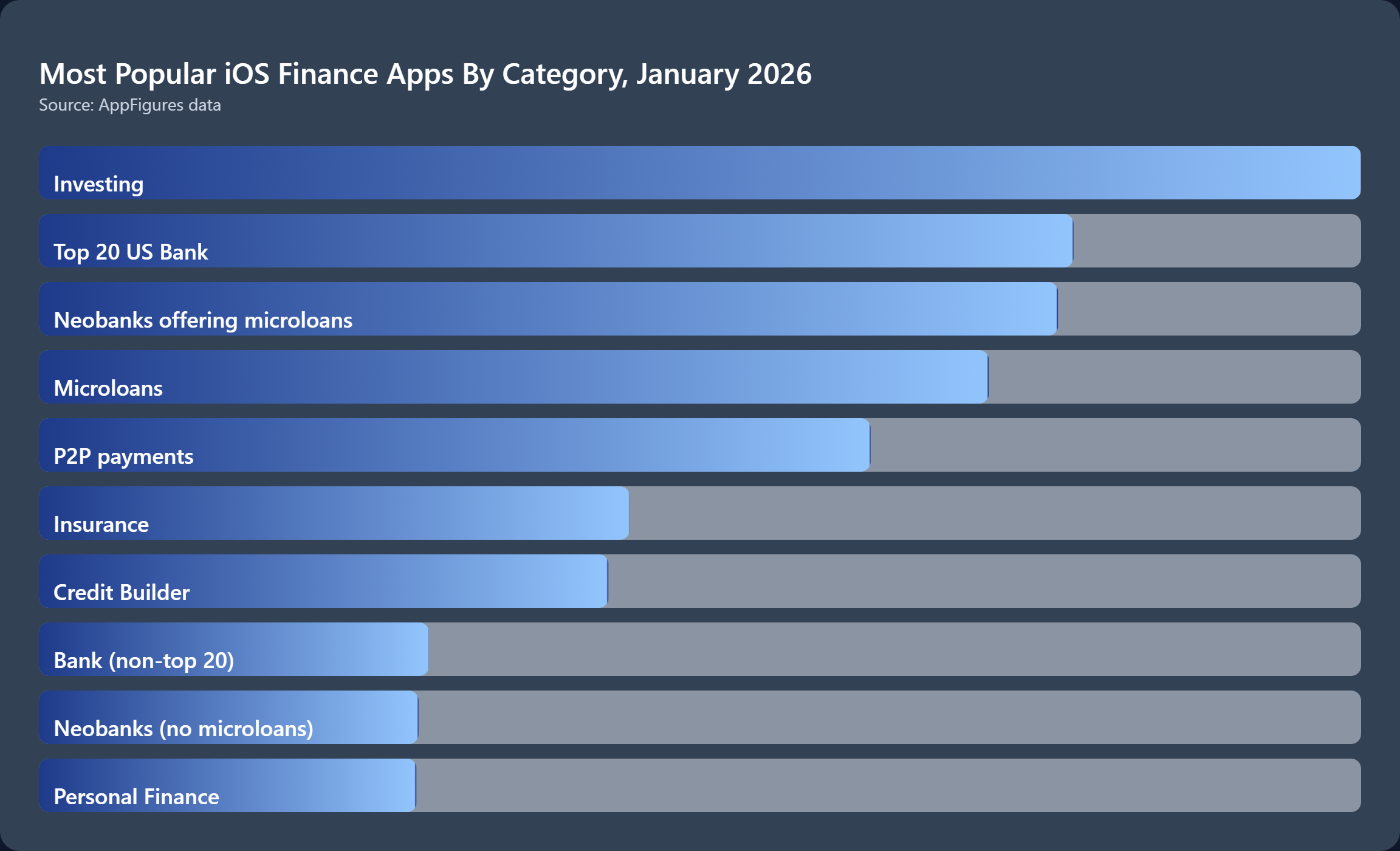
Investing apps were the most popular kind of app, with traditional players (Fidelity, Empower, Schwab) mixed in with newer entrants (Robinhood, Alinea).
Now, while this data is important, 40% of mobile phone users don’t use iOS (aka Apple). They are Android users, so their app download data lives in the Play Store. Do their habits differ from iOS users?
GOOGLE PLAY STORE (January 2026)
Biggest Riser: TurboTax
Top 5 Apps: Freecash, Cash App, Paypal, Chime, Venmo
Just like for iOS, TurboTax and other tax prep apps were rapid risers during the month. However, the Freecash app, an app where users can earn money and rewards through surveys, offer sign-ups, etc., is far more popular on the Play Store. Similarly, Chime is more of a top 5 app on the Play Store (vs a top 10 app in iOS). And P2P apps appear far more popular. So, does this mean the Play Store’s top app categories will look different than the iOS store?
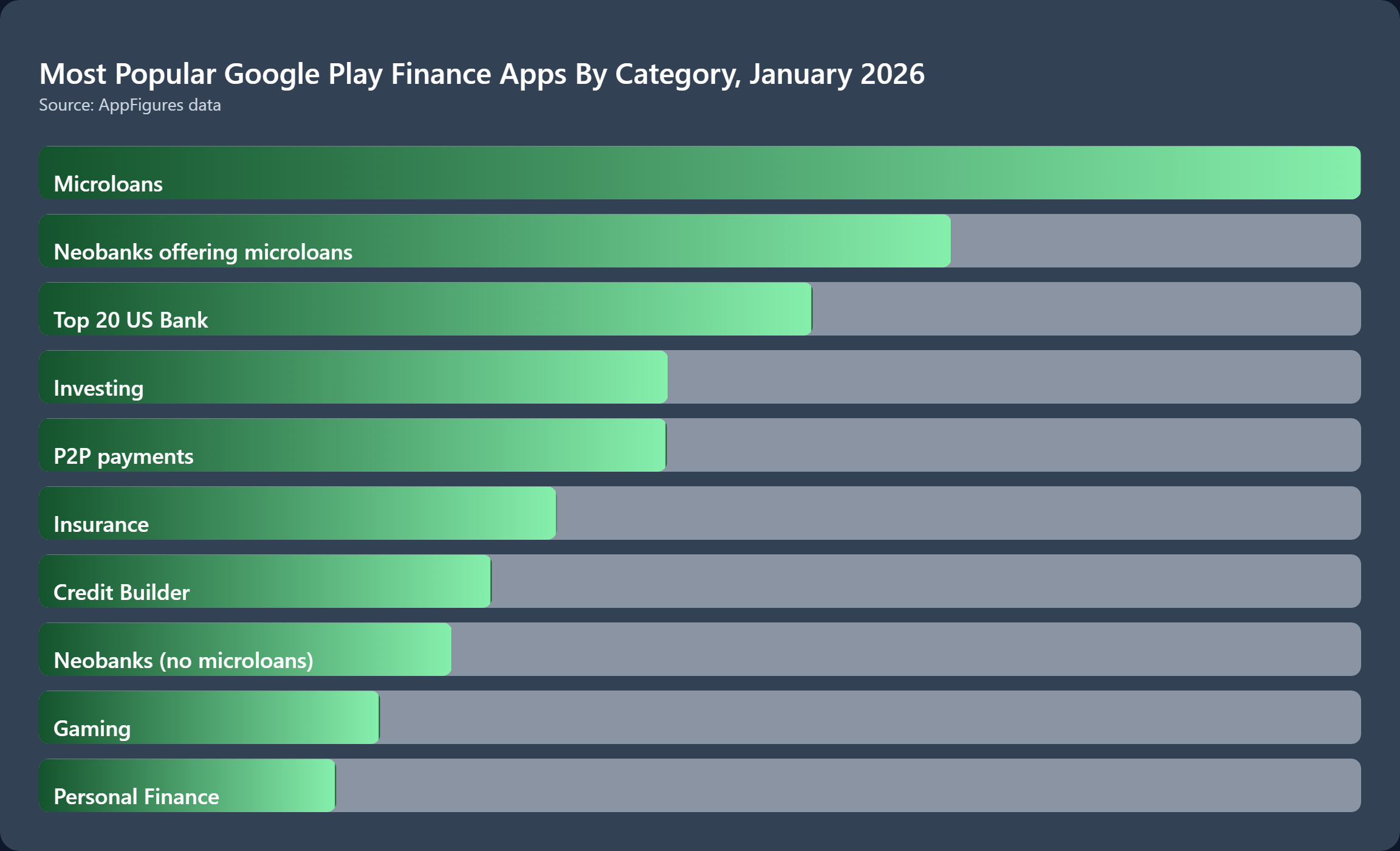
Microloan apps, offering users short-term loans of $25 to $500 in minutes, are by far the most popular kind of app on the Play Store. Apps like Tilt, Brigit, Grant Cash Advance, Cleo, and Klover are all regulars in the top 25 or top 50 of the Play Store rankings, despite being far lower in iOS (or completely outside the top 100). This could reflect a higher consumer demand amongst Android users, or it could also reflect a strategic choice to focus on customers on only one store instead of both. Either way, there are clear differences in the stores. What would it look like to combine the data? What would the top categories of apps look like if you combined the iOS and Play Store data for January, giving proportionally higher weight to the iOS data?
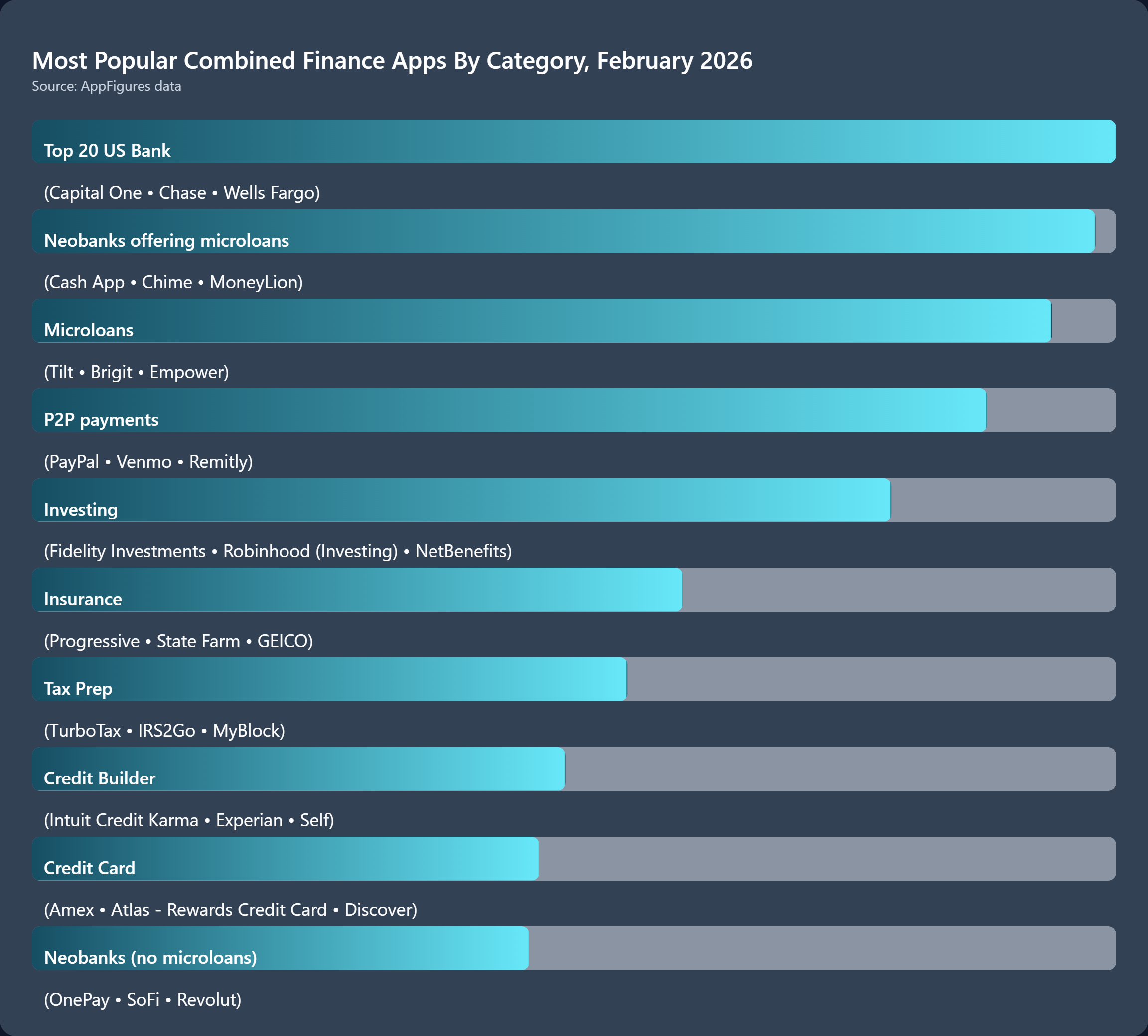
COMBINED APP STORE DATA (January 2026)
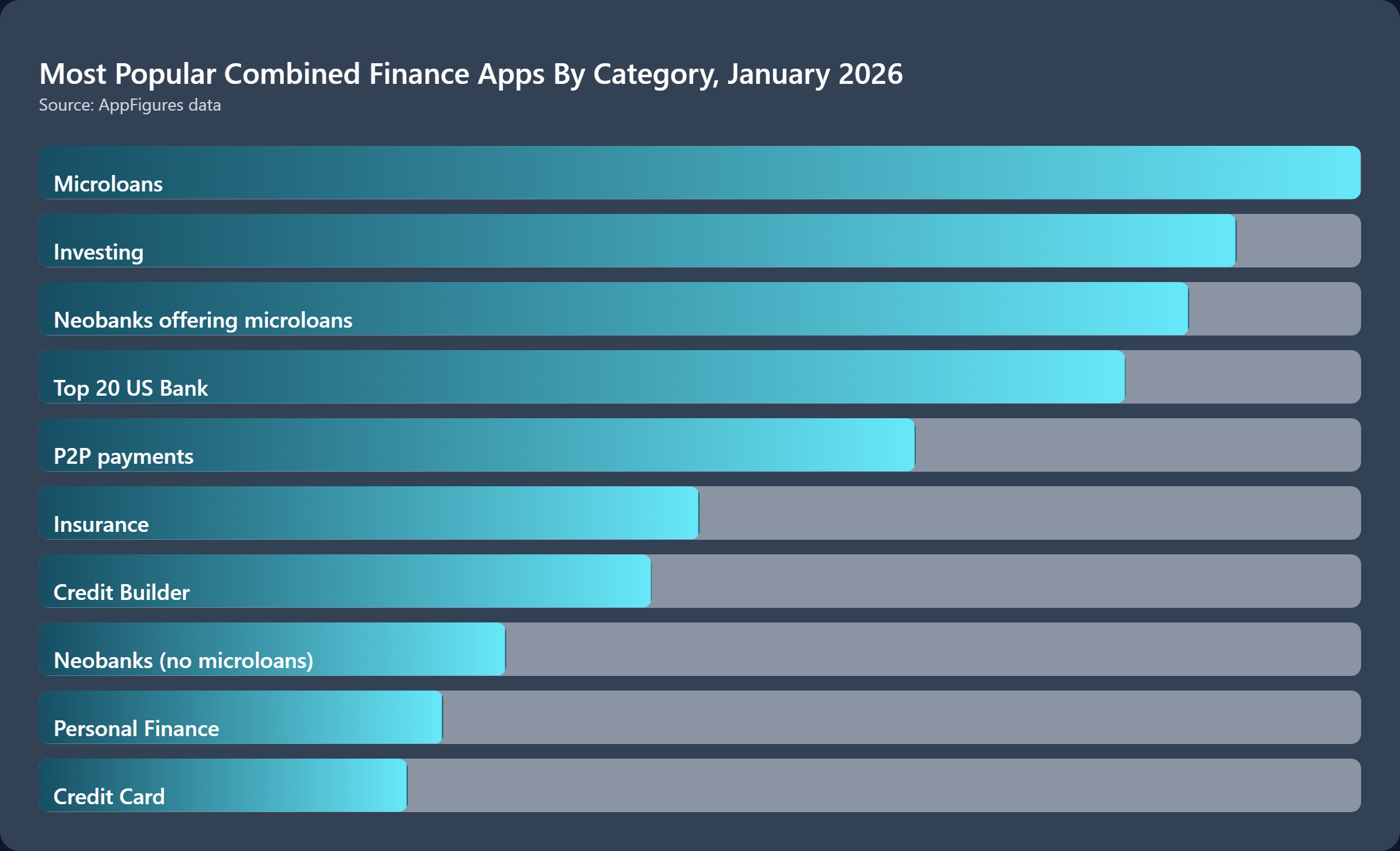
This data provides arguably the clearest picture of what consumers actively sought out in January 2026. There are clear areas of focus for the consumer: microloans, investing, P2P payments, insurance, credit building. And for fintechs that can offer those products, there are clear benefits in terms of user demand. Neobanks offering microloans are more popular across both app stores than Top 20 US banks (with far larger user bases) and neobanks not offering microloans.
In its ideal form, this data should serve as a roadmap for any company looking to serve consumers. At a practical level, it should spark conversations about what areas of focus rise above others. If your mission is to meet consumers where they are, given them the solutions they’re looking for today – before they find it somewhere else.
If you’d like to learn more about this work, or if you’d like to talk about how Salus can help you connect with Gen Z with the products they love, let’s connect.
*App store data from AppFigures
Let's Start Making Members For Life